The 6-Minute Morning Reset
There’s a lot of pressure around morning routines.
Long workouts. Early alarms. Productivity rituals.
But here’s something simpler: you do not need a full workout every day. Some mornings, six minutes is exactly what your body needs to feel looser, more awake and more like yourself.
Below you’ll find the full six-minute barre-based stretch sequence. It’s designed to gently wake the body, restore mobility and shift your nervous system out of sleep mode — without shock or strain.
Why you need to move in the morning
Mornings are when the body is at its stiffest.
After hours of sleep, joints are less lubricated, circulation is slower and the nervous system is still waking up. Rather than jolting yourself into the day, this short sequence works with your physiology.
We mobilise the spine.
We wake up the hips, ankles and shoulders.
We encourage blood flow gradually.
It’s not about burning calories or pushing hard. It’s about creating space, restoring range of motion and starting the day feeling connected rather than rushed.
Why six minutes can be enough
Six minutes is long enough to move every major joint, raise circulation and gently transition your body into “ready mode.” On busy mornings, it removes the all-or-nothing mentality.
You don’t need a full workout every day. Some mornings, six minutes is exactly what your body needs.
How I came to six minutes
Six minutes felt realistic.
I wanted something short enough that people would actuall\y do it — before the school run, between meetings, or straight out of bed. It’s long enough to feel the benefits, but short enough to remove excuses.
If you have more time, it can become a warm-up.
If you don’t, it still stands alone.
Simplicity makes consistency possible.
Why doing something first thing changes your mood
Movement first thing sends a powerful signal to the brain that you’re looking after yourself. It increases blood flow, stimulates endorphins and creates a sense of intention before emails and responsibilities take over.
Even a short routine can shift your energy. You begin the day feeling grounded rather than reactive.
And that matters more than we often realise.
Why it builds better habits later in the day
When you move in the morning, you reinforce an identity: I’m someone who takes care of my body.
That mindset ripples outward. It often leads to better posture, more movement breaks and more intentional choices as the day unfolds.
Starting small makes consistency easier.
Consistency is what builds lasting habits.
Why doing something is better than nothing
The body responds more to regular, intentional movement than occasional intensity.
Gentle mobility keeps joints healthy, muscles responsive and the nervous system balanced. Skipping movement because you “don’t have time” often leads to more stiffness later.
A few minutes keeps the body ticking over.
Why each move was included
Every movement in this sequence is intentional.
Rather than isolating one muscle at a time, the focus is on whole-body, flowing patterns that connect upper and lower body. This mirrors how we actually move in daily life and is especially suitable for mornings, when the body prefers gradual, integrated motion.
There’s no impact.
No fast transitions.
No deep end-range holds.
The pace is calm. Breath is steady. The body wakes up progressively.
Inside the 6-Minute Sequence
Here’s what you’ll move through:
Breathwork with arm swings
The sequence begins by connecting to the breath while gently swinging the arms over head and down by our side. Inhaling as the arms lift and exhaling as they fall helps expand the ribcage, increase circulation and bring awareness into the body after sleep.
Lateral flexion and rotation
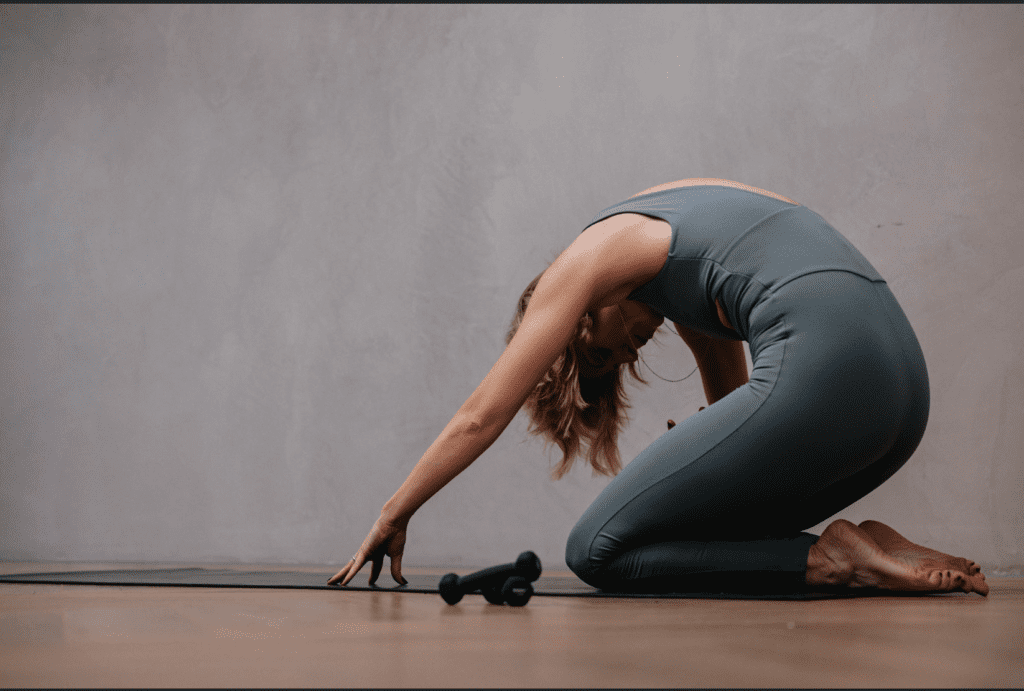
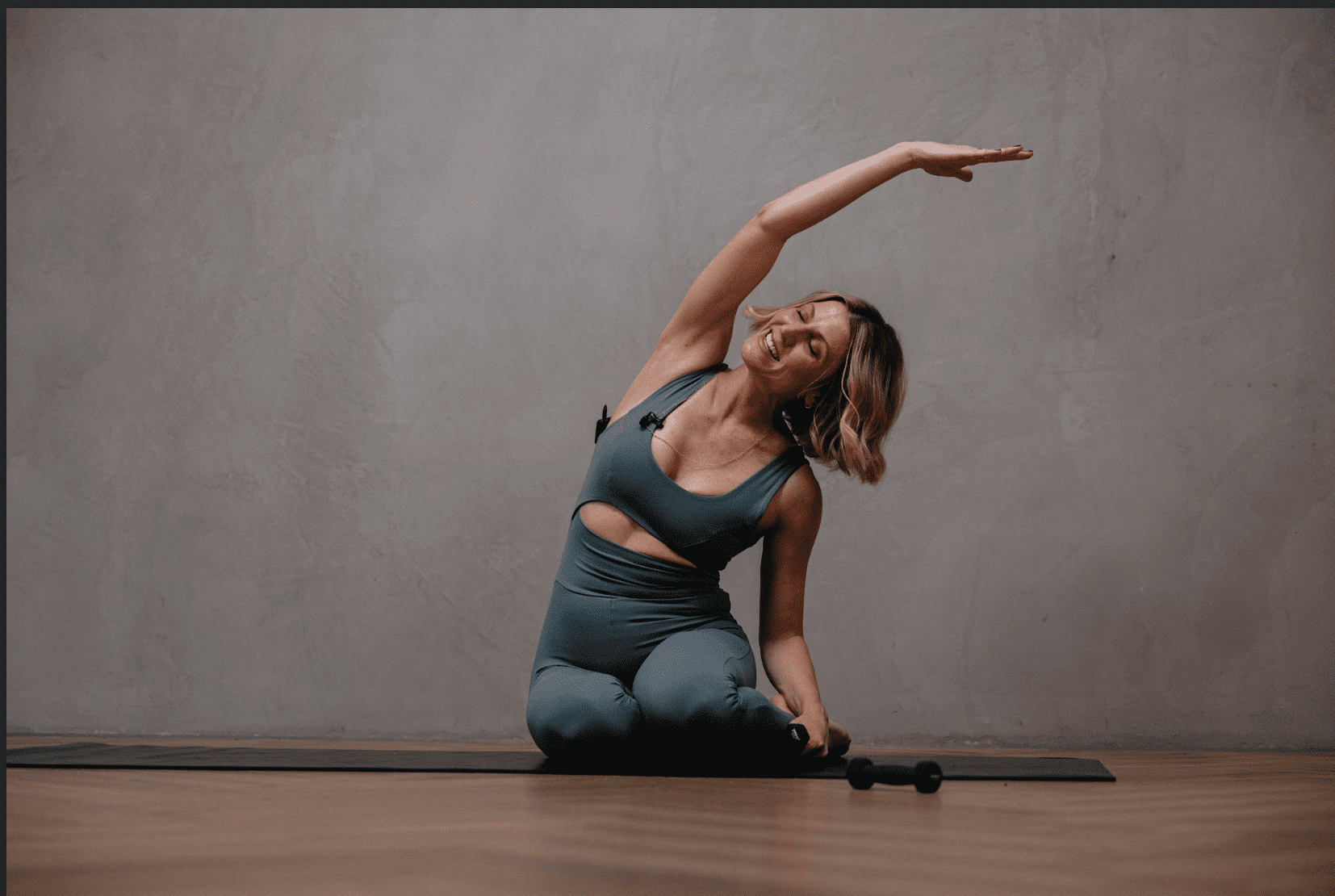
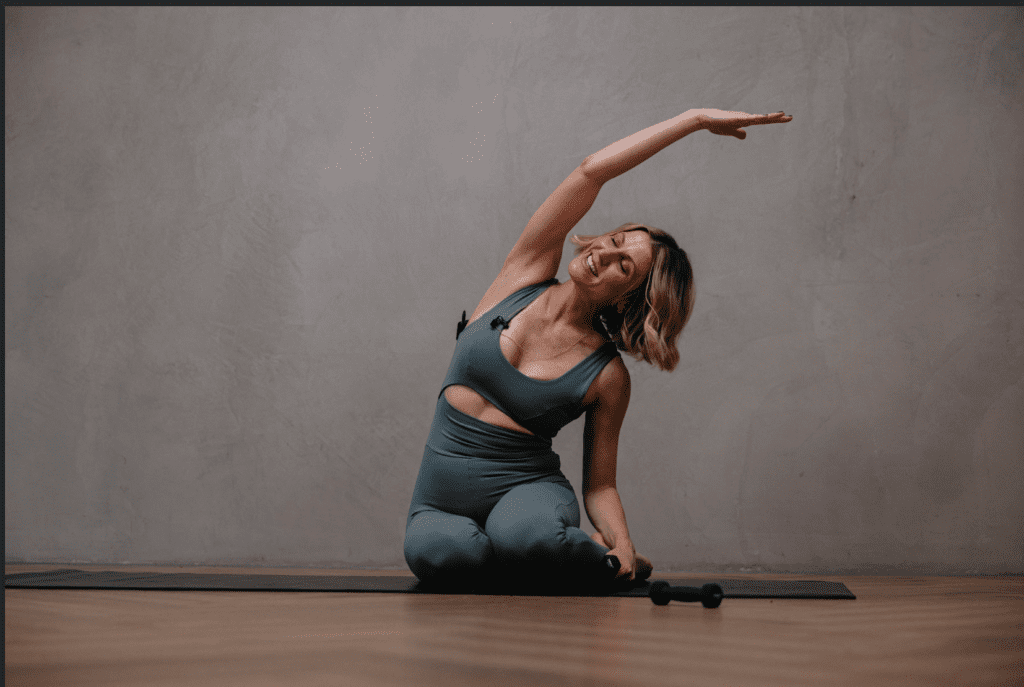
Side bends and gentle twists follow, encouraging mobility through the spine and waist. These movements release tension from the back and shoulders and help restore natural spinal movement early in the day.
Arms pulling down for a lat stretch and chest opener
Drawing the arms down activates the upper back and opens the chest, counteracting rounded posture and shallow breathing. This creates a feeling of openness across the front of the body.
Interlaced hands with side-to-side rotation
With fingers interlaced in front, gentle rotations mobilise the upper spine and shoulders while keeping the movement controlled and fluid.
Standing roll-down with alternating knee bends
The roll-down articulates the spine one vertebra at a time, decompressing the back. Bending one knee and then the other deepens the stretch through the backs of the legs while gently releasing the lower back.
Shoulder rolls forwards and backwards
Rolling the shoulders in both directions lubricates the shoulder joints and releases any lingering tension in the neck and upper back.
Balance work and proprioception
The sequence finishes with balance as we tap one foot forward, then lifting it to stand on one leg. Rising onto the balls of the feet challenges proprioception, wakes up the feet and ankles and brings focus and steadiness before stepping into the day.
You don’t need to overhaul your mornings.
Just press play.
Move for six minutes.
Notice how you feel.